 Newsletter

Why do we throw our money out of the window on unnecessary things and fill our homes with stuff we don’t even need? If you consciously focus on what really matters in life, you can save a lot of time and money – and find more peace of mind on top of that. Our guest author is convinced of this after 18 years of minimalism experience.
We’re constantly comparing: more beautiful, bigger, further. Who’s more successful at work and who brings home more money? The fancy car, the cool clothes, the trendy bar, the next trip around the world – these are everyday status symbols. It’s hard to bear when our friends, family or colleagues can afford more than we can. And so we buy as much as our bank account allows. Today, consumption is what holds our society together. Without realising it, we define ourselves through identities we’ve bought. That’s how far marketing and advertising people have brought us. Many people even list shopping as a hobby. And we feel like failures if we can’t keep up with everyone else. Advertising sells us the idea of a perfect, sporty, meaningful world that we can have quite easily – by consuming.
But does that make us any happier or more content? If you buy things to be happy, you’ll never find that happiness – or, as social scientist and economist Juliet B. Schor of Boston College puts it: “No matter how much you have, it’s never enough. This creates the expectation that the next purchase will bring happiness, and then the next one. Like drug addicts, consumers constantly need extra kicks to maintain a certain level of satisfaction.”
A shift in values: what makes us content
How do we manage to become more content with less consumption and without status symbols? Values play a crucial role here. Values aren’t basic needs like food, sleep or a roof over our heads. But values matter for our lives. If we don’t know where our journey is heading, we’ll never be content. Everyone has values. Often we don’t know what they are, or we push them aside.
But not knowing what matters to us causes stress and dissatisfaction. And at the end of our lives, we ask ourselves what on earth we were doing all that time. To be able to look back happily on a fulfilled life, it’s important to be clear about your own values. Values help us give our lives direction – to know what we need, what brings us joy and when we’re content. Unfortunately, we often live only to please others, or to unconsciously fulfil other people’s values and goals – our partner’s, our children’s, our parents’, our friends’ or our boss’s.
Have you ever thought about what matters to YOU, apart from consumption, work, career and the stock markets?
Knowing your own values also helps you live a life with less baggage. You then know where you want to go and how you want to live in the future. If your values are, say, “freedom”, “lightness” and “order”, you’ll measure every decision about whether something goes or stays against these values.
Take time to ask yourself: do you want to live by your own values, or carry on mainly trying to please others? How would it feel to go through life with less baggage, compare yourself less, live more frugally, buy and consume less – and enjoy more space, time and freedom in return? You may find these questions hard to weigh up. A coach can help you discover your values and accompany you on the path to a lighter life.
– P a r t n e r o f f e r –
If you’re after minimal fees, the online broker DEGIRO is the right place for you, as our DEGIRO review has shown. If DEGIRO has won you over too, you can sign up via our partner link. That way you support our blog and get a bonus of CHF 100.

– – – – –
My minimalism experience
My minimalism journey began 18 years ago. I’d always been a tidy person. But reading various books on a reduced lifestyle back then made me seriously question my attitude to consumption once again. So I decided to go through life with fewer things and fewer demands, and to enjoy more freedom instead. Over the years, I’ve steadily reduced my personal possessions and shed unnecessary baggage.
Of course, that’s not always easy to put into practice with a family. You have to take everyone’s needs into account and not put your own views and wishes above those of your family. But it’s been worth it. Today I work part-time and only own what I really need and what brings me joy. When I travel, too, I only take the bare essentials. With two to three kilos in a small backpack, I travel very light.
Is less really more?
For a few years now, minimalism has been popping up on every channel. People talk about how they’ve cleared out their houses and flats and started a new life, free and without baggage. Meanwhile, we sit comfortably on the sofa at home watching Marie Kondo declutter on Netflix. After a TV show, we’re left wondering whether we should be applying 5 or 10 “laws of minimalism”, or whether we should just jet around the world as digital nomads. Have we failed if, after tidying up, there are still more than 100 or 200 items lying around the flat and we don’t always put the coffee cup straight into the dishwasher?
Let’s relax! First, the minimalism hype has probably peaked; second, extreme minimalists are rarely real role models; and third, reality isn’t always the way it looks on screen. We don’t have to empty our homes completely to live a better and lighter life!
Every item needs time and space
A hundred years ago, the average family owned around 200 things; today it’s 10,000. It starts with the car and the bike and goes on to the entire kitchen, from spoons to frying pans. Then there are all the clothes we never wear again but which still take up space in wardrobes and drawers. Next come the books that, hand on heart, we’ll never read a second time. They fill entire walls. Just like the CDs and DVDs gathering dust because we’ve been streaming music and films for ages. The countless cables, electrical appliances and all the unused junk in the basement and garage are also among the things that have piled up over the years.
And there are more and more of them, because very few things ever find their way back out of the house.
Too many things and too many possessions weigh us down, as we’ll see later. This is where a reduced lifestyle can help you. With a clear view of your own values and goals, you’ll be able to cut down on both the number of objects and your mental baggage. The actual number of things doesn’t matter.
Focus on useful things, activities and contacts
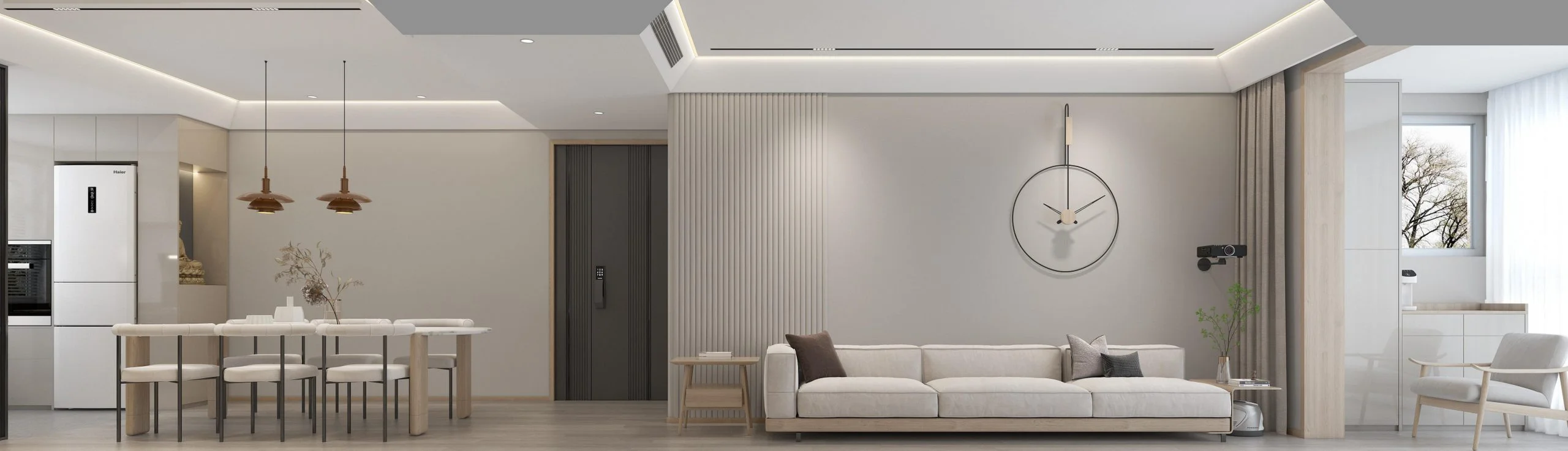
Rather, it’s about making conscious decisions and keeping what’s needed and loved – and letting go of the rest. Not doing without, but choosing consciously. Focus on the things that add value to your life or that are used regularly. This includes items with a high aesthetic or emotional value.
And so you reduce your possessions, activities and social relationships until only what matters for your life is left. Anything that isn’t used, doesn’t really help you reach a goal or no longer brings you joy goes. That can be objects or activities, but also social contacts that drag you down.
If you’ve read this far, you may be wondering how best to reach the goal of going through life with less baggage. Of course, you can go down this path on your own and part with things, activities and contacts step by step. That’s how I did it too. But believe me, together with others – and with professional help if needed – it goes much faster and is a lot more fun!
Minimalism as a stepping stone to your financial freedom
Often it’s only when we give things away that we feel how much lighter life becomes. There’s the half-finished craft or sewing project we’ve been meaning to complete for ages. The racing bike has been sitting unused in the basement for years and the ski gear is slowly rusting away. It’s time to part with these things. And with giving them away comes relief, and the guilty conscience disappears.
And remember: every item needs your attention. Often we’re not even aware of it. Things just sit there. But they take up space. Fewer things mean less living space, less furniture and less storage. A positive side effect: there’s also less for you to keep in good shape. Things need time and energy for care, maintenance and cleaning. And they cost money. At the latest when you have to buy extra things just to store your things, you’ll notice how much money you could actually save.
And don’t forget: in the end, you also have to get rid of all that stuff. That costs time, energy and money yet again. Money you could put to better use or invest – for more financial freedom.
Tom Less has been exploring simplifying, structuring and living a fulfilled life with less baggage for around twenty years. For 25 years, he worked in various roles in communications and journalism.










5 Comments
Hallo, vielen Dank für Deinen sehr ausführlichen Artikel. Super geschrieben mit guten Tipps und Anregungen. Mit Deinen 18 Jahren Ausmisterfahrung spielst Du in derselben Liga wie ich.
Im August 2002 fing ich damals mit ausmisten an. Da gab es noch keine Marie Kondo (Magic cleaning). Ich möchte Deine Ausführungen ein wenig ergänzen. Wer mit Ausmisten beginnt, und keinen Druck hat, ist ganz klar im Vorteil. Der Hinweis auf Systematisches Vorgehen ist problematisch. Habe damals bewusst Vollkommen chaotisch entsorgt. Mal von oben links und dann von unten rechts entnommen. Warum?? Ich wollte mich bei der Menge der Teile nicht unter Druck setzten. Der gesamte Vorgang dauerte für meine Wohnung etwa 3 Jahre. Danach kam dann das Haus dazu mit nochmals etwa 5 Jahren. Bis Ende 2009 musste dann plötzlich doch das Haus als Ganzes leer sein. (Innerhalb von 6 Monaten!). Ausserdem ist es ganz entscheidend, dass ich vom Beginn meines ausmistens mein Konsumverhalten drastisch ändere. Ich kaufe nur noch, was ich unbedingt zum Leben benötige. Dazu muss ich bereit sein! Noch ein letzter Hinweis zum Thema Bekleidung. Auch wenn der Schrank überquillt, werden keine Kleidungsstücke und keine Schuhe weg gegeben. Diese Teile hatte ich alle gekauft, um sie zu tragen. Dann werden sie auch getragen! Zwangsläufig kaufe ich dadurch die nächsten Jahre keine neuen Klamotten. So einfach ist das.
Viele Grüße aus dem Schwabenland/Deutschland
Bernd
Hallo,
der Artikel hat mir wirklich sehr gefallen.
Aber der Minimalismus ist nur bis zu einem begrenzten Grad ein geeignetes Mittel, um finanzielle Freiheit erlangen zu können. Der Viel größere Hebel ist meiner Meinung nach, das Einkommen zu erhöhen.
Minimalismus ist in meinen Augen einen guten Weg, um sich der Welt wieder bewusster zu werden.
Super Artikel: Weniger ist mehr!
Das Ganze geht mit Prioritäten, Bescheidenheit und Selbstbewusstsein einher.
Der Mensch ist Neid- und Wettbewerbsgetrieben (im negativen Sinne) und vergleicht sich daher permanent mit anderen, auch beim finanziellen!
Das wird jeweils von der Werbung manipulative geschickt ausgenutzt nur um mehr sinnlosen (Klimaschädlichen) Krempel an den Mann/Frau zu bringen nur um den Konsum und die Illusion des (nicht nachhaltigen) ewigen Wachstums aufrecht zu erhalten.
Nachhaltigkeit beschränkt sich aber nicht, wie uns suggeriert wird, im Recyling sondern besonders in der Langlebigkeit und vielfach Nutzung der Güter.
Diese Denke ist der “natürliche Feind” des ewigen Wachstums zu immer günstigeren Preisen.
Getrieben davon, jedes Jahr wiederkehrenden Einnahmen zu generieren, wünscht sich das ewige Wachstum demagogischen Wachstum sowie jährlichen Ersatz der Güter und gehen sogar soweit bis zur geplanten “Qualitäts-” oder “Lieferminderung” durch planed Obsolence (bei der kurz nach Ablauf der Garantie die Funktion eingeschränkt wird) oder Alternative nur noch gegen Ersatz oder Gebühr erhältlich ist. (Renault/Tesla, IT Industrie)
Das Ganze Manipulationen führen eben dazu, dass dem Narzismus (dem gefallen Wollen) sowie dem Status mehr Gewicht gegeben wird als diesen zusteht.
Das fängt schon damit an, dass z.B. das Auto poliert, der Garten und Aussenraum “schöner und aufgeräumter” sein muss als der Private Wohnbereich, weil der Aussenein-Druck zählt. Etc.
Reflektiert der Mensch sein Inneren Druck und sein Lebenszyklus stellt er fest, was er wirklich, in welcher Qualität und Menge, benötigt und das ist wenig
– Sichere & Verlässliche Vorsorge für das Alter / Schwächezeiten
– Nahrung (Natürliche&Gesunde sprich BIO)
– Wohn- und Freiraum (Gesund, gemütlich und behaglich)
– Kleidung
– Soziale interaktion (Sexualität, Teilhabe und Geselligkeit)
– Intelektuelle Herausforderung (Lernen und Selbstverwirklichung)
Alles andere ist stets irgend ein Ersatz für innere Unzufriedenheit.