
 Newsletter
Lower fees, more features: Following a comprehensive realignment, Saxo has now eliminated account maintenance fees and, for the first time, offers all ETF savings plans without purchase commissions. Discover how the platform stands out with attractive terms, modern trading solutions, and Swiss regulation—and where it still has room for improvement. We also compare the up-and-coming Saxo with the established Swiss market leader Swissquote and show which platform is best suited for whom.
A brief interview with Oliver Buomberger, COO and Deputy CEO of Saxo Bank Switzerland, offers additional fascinating behind-the-scenes insights. You’ll learn all this and much more in this comprehensive review – well-founded and based on our experience at Saxo Bank.

In a Nutshell
With substantial fee reductions and new features such as ETF savings plans with no purchase commissions, Saxo Bank is repositioning itself— for the savvy ETF investor as well as the active trader. Here’s an overview of the key points:
- Swiss Banking License & Deposit Insurance: Regulated in Switzerland with coverage up to 100,000 CHF.
- No custody fees: The annual custody fee has been eliminated entirely.
- Moderate trading fees: Depending on the account type, starting at 0.03%, 0.05%, or 0.08%, with a minimum fee (e.g., 3 CHF / 1 USD), depending on the trading venue.
- All ETF savings plans with no purchase fees: automatic monthly contributions (“AutoInvest”) with individual weighting; only whole ETF shares are purchased, and any remaining amounts are rolled over into the savings plan the following month.
- Foreign Currencies & FX Costs: Flat currency conversion fee of 0.25 %; foreign currency accounts (subaccounts) can be set up.
- Modern trading platforms: Intuitive trading interfaces tailored to specific investor types, ideal for mobile use as well.
- Efficient Support – Multilingual support via phone, email, chatbot, or ticket system
- Free electronic tax statement: Available free of charge via the platform starting with the 2025 tax year.
Our experience with Saxo Bank shows that anyone looking for a cost-effective, regulated Swiss platform—with a focus on long-term investing and flexible trading—will find a compelling solution here.
🎁 Via our partner link , you can open an account and get a sign-up bonus worth 200 CHF.
Contents
- CHF 200 in trading fees for free – our Saxo partner offer
- Our Focus: Passive ETF Investing with Saxo
- Saxo Bank—A Brief Profile
- How reliable is Saxo as a broker?
- What types of accounts does Saxo offer?
- Fees Redefined – Attractive After the Plunge in Fees
- Here’s Why Apps and Trading Platforms Are So Good
- Investment Products & Services
- Our Experience with Saxo Bank’s Customer Support
- What is the process for opening a brokerage account?
- Saxo vs. Swissquote: A Head-to-Head Comparison
- Interview with Oliver Buomberger, COO & Deputy CEO of Saxo Bank Switzerland
- Final Conclusions and Recommendations Based on Our Experience with Saxo Bank
- You might also be interested in this
- Update
- Disclaimer
CHF 200 in trading fees for free – our Saxo partner offer
If our experiences with Saxo Bank convince you, you can take advantage of this generous offer right now—and support our blog at the same time:
Click on the ad below to open a free investment account with Saxo Bank—including CHF 200 in free trading fees!
📋Terms and Conditions:
- You are a natural person over the age of 18 who resides in Switzerland.
- You make your first deposit within 30 days of opening your account. (After you make the deposit, your bonus will be activated within three business days. Rebates on trading fees for ETFs, stocks, bonds, futures, and options are credited directly to your account daily.)
- This offer is valid for 90 days. Any unused credits will expire after that. Other fees will be charged as usual.
🔍 Transparency Notice:
We only recommend products that we have tested ourselves and are confident in their quality. If you open an account through our affiliate link, we receive a commission—but this doesn’t cost you anything extra.
Our Focus: Passive ETF Investing with Saxo
Anyone familiar with our blog knows that we follow a passive, low-cost, broadly diversified “buy-and-hold” investment strategy. We’re convinced that such a strategy is best implemented using ETFs. That’s why, in this review based on our experience with Saxo Bank, we’re evaluating the provider primarily from the perspective of a passive ETF investor.
Saxo Bank—A Brief Profile
Saxo Bank was founded in Copenhagen, Denmark, in 1992 and is now one of Europe’s leading online brokers with an international focus. It serves over 1.5 million clients worldwide , with assets under management exceeding 100 billion CHF across more than 170 countries (as of January 2026).
A unique feature: Saxo combines access to global markets with a locally regulated infrastructure.
Specifically for Swiss investors, this means that Saxo Bank (Switzerland) AG is a legally independent subsidiary headquartered in Zurich and holds a banking license from the Swiss Financial Market Supervisory Authority (FINMA). In addition, Saxo was designated a systemically important financial institution (SIFI) in 2023.
Saxo does not operate any branches in Switzerland —all services are provided digitally. Its offerings are primarily aimed at independent investors who value low fees and professional trading options.
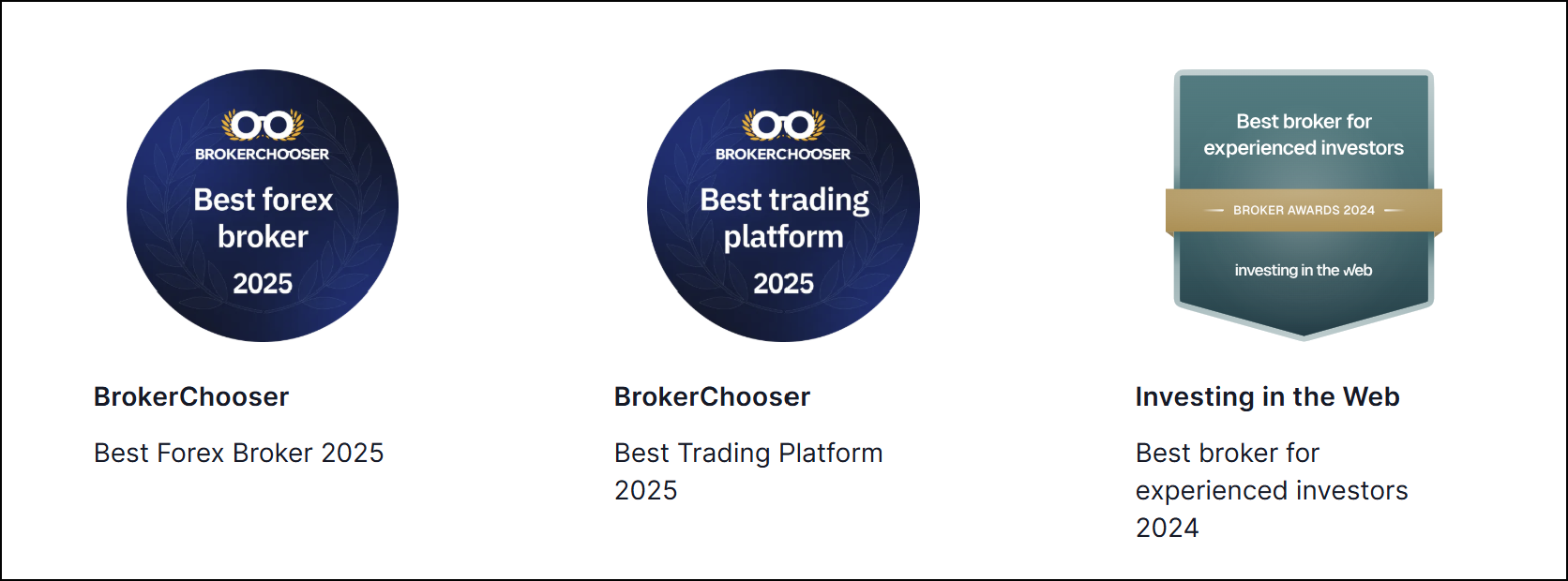
Saxo has received numerous awards in the past, including for its trading platforms, innovation, and customer service.
How reliable is Saxo as a broker?
The security of invested capital is crucial for investors—especially when dealing with purely digital providers. The good news is that Saxo meets high security standards, both regulatory and technical.
Specifically, these standards apply to Swiss investors in three key areas:
- Deposit Insurance at Saxo Bank (Switzerland) AG
As mentioned, Saxo is a Swiss bank regulated by FINMA. Client funds are managed in accordance with Swiss legal requirements and are protected by deposit insurance esisuisseup to 100,000 CHF per client and bank —even in the event of bankruptcy.
- Separate custody of securities (special assets)
Securities such as ETFs and stocks are legally considered segregated assets and are held separately from the bank’s assets . They do not appear on the bank’s balance sheet and remain fully owned by the investors even in the event of insolvency. A transfer to another account is possible at any time.
- Technical Security and Protection Against Cyber Risks
Access to the Saxo account is granted exclusively via two-factor authentication (2FA). In addition, Saxo relies on a modern IT infrastructure featuring encryption technologies, regular security tests, and its own Cyber Security Operation Center (CSOC) to monitor potential attack attempts.
What types of accounts does Saxo offer?
Depending on the amount of assets invested, Saxo Bank clients are automatically assigned to one of three account models: “Classic,” “Platinum,” or “VIP.” While no minimum deposit is required for “Classic,” the minimum deposit is 250,000 CHF for “Platinum” and 1 million CHF for “VIP.”
True to the saying “To those who have, more will be given,” with these two premium models, you’ll enjoy preferential terms when it comes to pricing and services—to put it simply:
- Classic: Standard Prices and Standard Services
- Platinum: Lower Prices and Improved Service
- VIP: Lowest Prices and Best Service

But keep in mind: An upgrade to a higher tier is valid for only one year—and depends not only on the amount of your deposit, but above all on how many points you earn through trades and other activities.
Specifically: The more often you trade and the higher your trading volume, the more points you earn.
This also means that committed buy-and-hold investors, who by nature trade infrequently, are unlikely to enjoy the benefits of “Platinum” or “VIP” status.
You can find out more about the “Saxo Rewards” points program here.
Fees Redefined – Attractive After the Plunge in Fees
Until now, we had found Saxo Bank to be unattractive due to its relatively high prices. However, with the new fee structure—particularly the elimination of custody fees effective February 1, 2025—this has changed fundamentally: Saxo now offers truly competitive terms.
While we still see foreign providers without a Swiss banking license—such as DEGIRO or Interactive Brokers—as leading the way in terms of price—not least because they are exempt from the federal stamp tax— Among providers regulated in Switzerland, however, Saxo has definitely positioned itself as a potential value-for-money leader thanks to its new fee model.
Below, we’ll take a closer look at the key pricing details for the three account models.
Custody fees—abolished!
Paying up to 100 CHF in custody fees plus VAT year after year, regardless of whether you trade or not? Those days are over! Saxo has eliminated these fixed costs for all its account models, which should make it a truly attractive option for price-conscious investors for the first time.
In addition, Saxo Bank does not charge inactivity fees.
Brokerage Fees (Transaction Fees) – Volume-Based with a Minimum Charge
Trading fees or commissions at Saxo depend on your account type—which is determined by your invested assets and other factors, particularly trading frequency and trading volume (see the section on account types above). The following terms currently apply:
Classic (Portfolio up to 250,000 CHF)
- Stocks/ETFs traded on Swiss exchanges: 0.08% of trading volume, at least 3 CHF per trade. Price example: 8 CHF commission on a trade worth 10,000 CHF
- Stocks/ETFs traded on European stock exchanges: 0.08%, min . 3 EUR
- Stocks/ETFs traded on U.S. stock exchanges: 0.08%, min. 1 USD
Platinum (Minimum Deposit: 250,000 CHF)
Minimum fees are the same as for Classic, but brokerage commissions are lower than 0,05%. Price example: 5 CHF commission on a trade worth 10,000 CHF
VIP (Minimum deposit: 1 million CHF)
Minimum fees are the same as for Classic, but brokerage fees are lower than 0,03%. Price example: 3 CHF commission on a trade worth 10,000 CHF
No purchase commissions on savings plans
Good news: Saxo doesn’t charge any brokerage fees for regular investments made through an ETF savings plan (“AutoInvest”), regardless of the size of your investment. We’ll go into more detail later about how Saxo’s savings plans work.
Note on Additional Transaction Costs
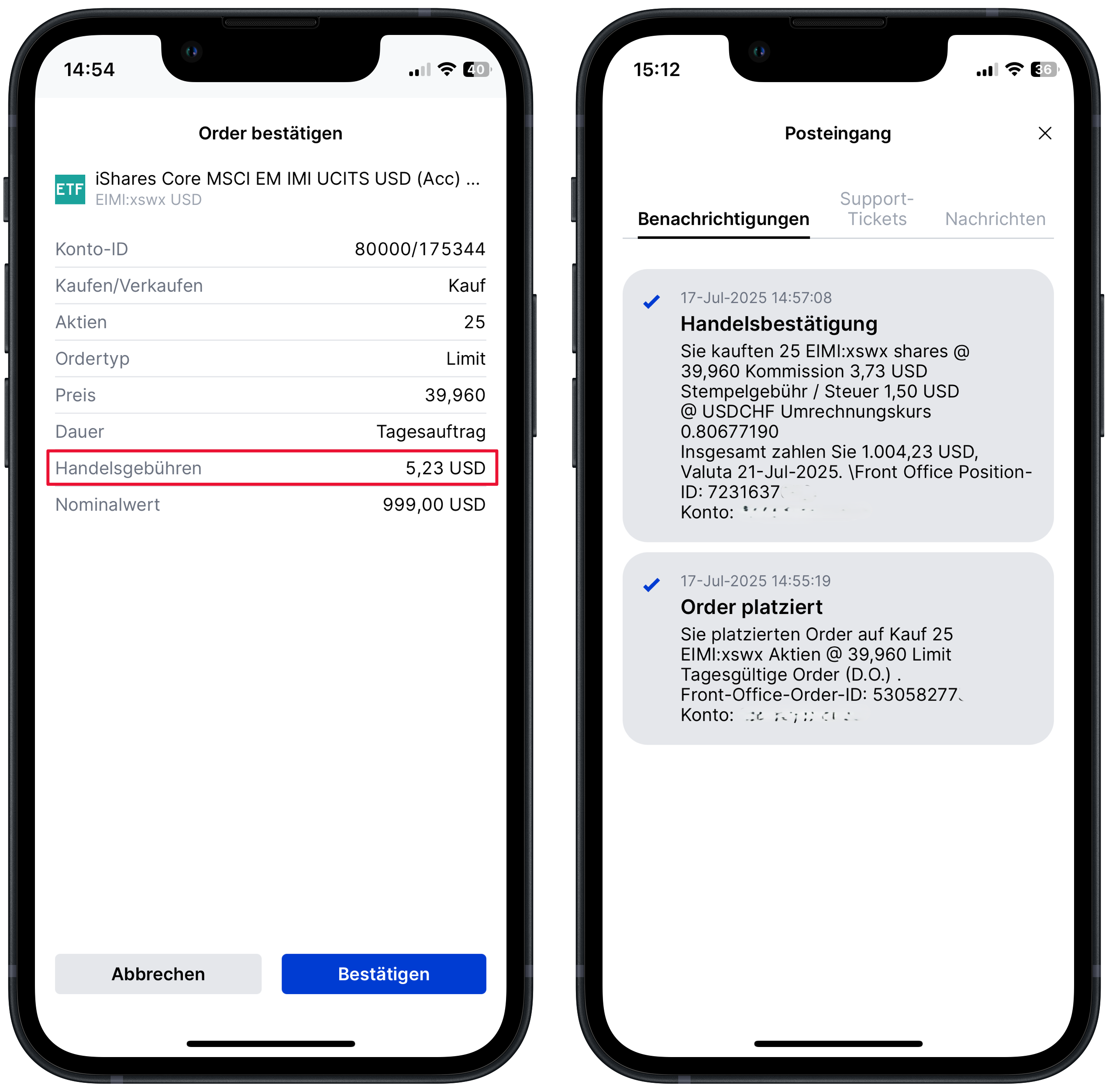
The brokerage fees listed above refer to the trading commissions charged by Saxo for executing trades. In addition, any currency conversion fees (see the next chapter) and the Swiss federal stamp duty apply per transaction:
- 0.075% on Swiss securities
- 0.15% on foreign securities
Currency conversion fees
At Saxo, currency conversion fees apply whenever you trade in a currency other than the one available in your account— for example, if you trade U.S. stocks but only have CHF in your account. In this case, a currency conversion is automatically triggered—and a conversion fee of 0.25% applies to the amount being converted. This rate applies uniformly to all account types (Classic, Platinum, VIP).
To keep these fees as low as possible, it’s worth setting up foreign currency accounts—we’ll show you how that works later in this review.
Interest Rates on Lombard Loans
If you want to increase your potential returns, you can take out a Lombard loan with Saxo and use your existing securities as collateral. The current interest rates are tiered based on your account type and are updated regularly. We find them attractive compared to other Swiss providers. You can learn more about how Lombard loans work and the risks involved in our article “Lombard Loans for ETF Purchases: A Booster for Your Return on Equity or Playing with Fire?”
Free Electronic Tax Statement
Starting with the 2025 tax year, Saxo will provide all clients with electronic tax statements free of charge via the platform’s inbox. This simplifies the Swiss tax return process, as the data from the electronic tax statement is automatically imported and no longer needs to be entered manually. The e-tax statement will be delivered by the end of March of the following year at the latest.
Here’s Why Apps and Trading Platforms Are So Good
Saxo provides its clients with a modern and versatile trading environment that can be used on a desktop or mobile device, depending on their needs. As of November 19, 2025, SaxoTraderGO and SaxoTraderPRO have been combined into a single platform called SaxoTrader. Below, we present the two available solutions and their respective feature sets:
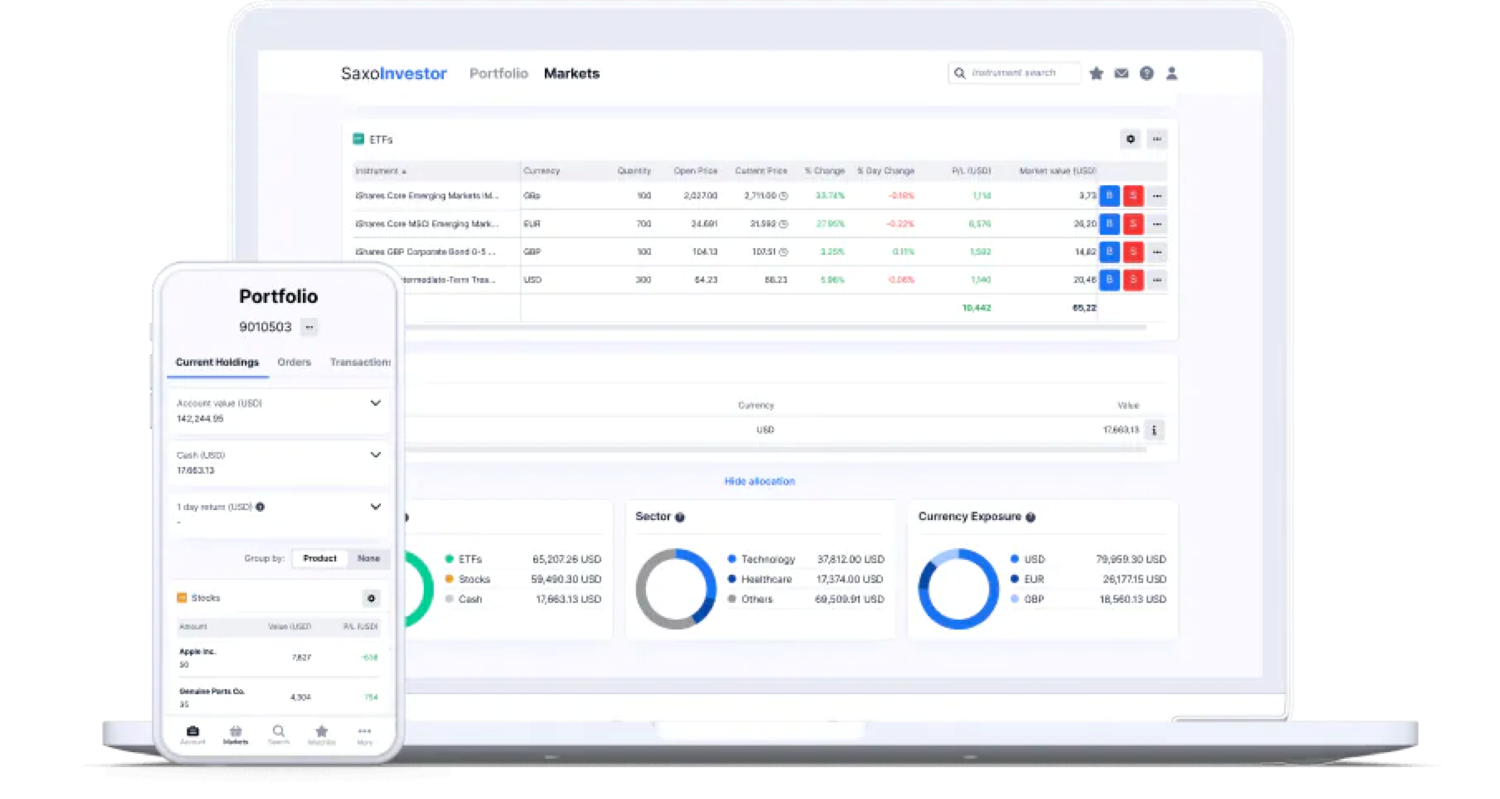
- SaxoInvestor
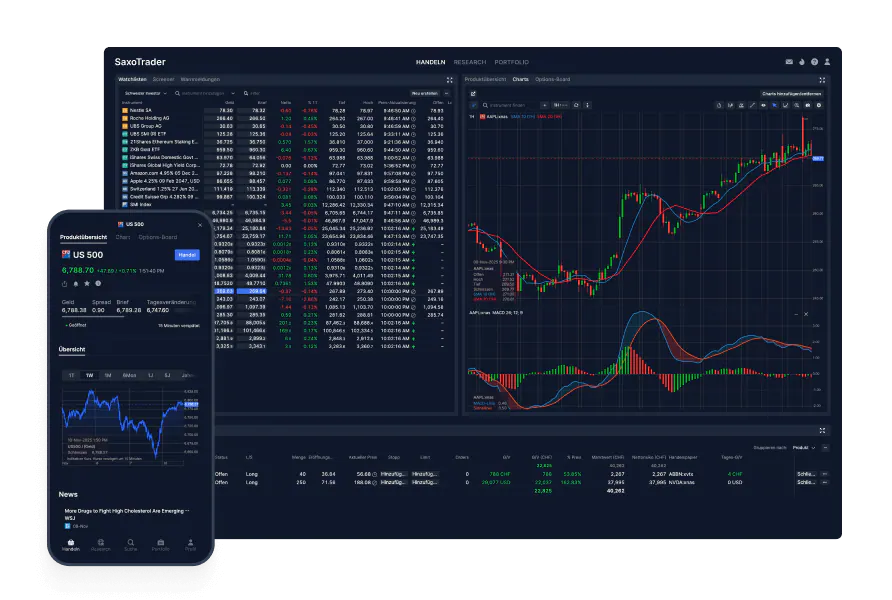
- SaxoTrader
Both platforms are free and available to Swiss customers in four languages: German, French, Italian, and English .
SaxoInvestor
The platform for a quick start—accessible via the web on your desktop or as an app on iOS and Android devices. It offers simple, intuitive navigation and is particularly well-suited for individual investors who want to easily invest in stocks, ETFs (with or without a savings plan), and other asset classes.
SaxoTrader
SaxoTrader is designed specifically for people who want to trade actively. The platform offers a wide range of instruments as well as advanced analysis and order functions. Trading in ETFs, stocks, bonds, and mutual funds is available as standard.
For more complex products such as Forex, CFDs, or futures, an additional suitability test is required—this can be completed directly online.
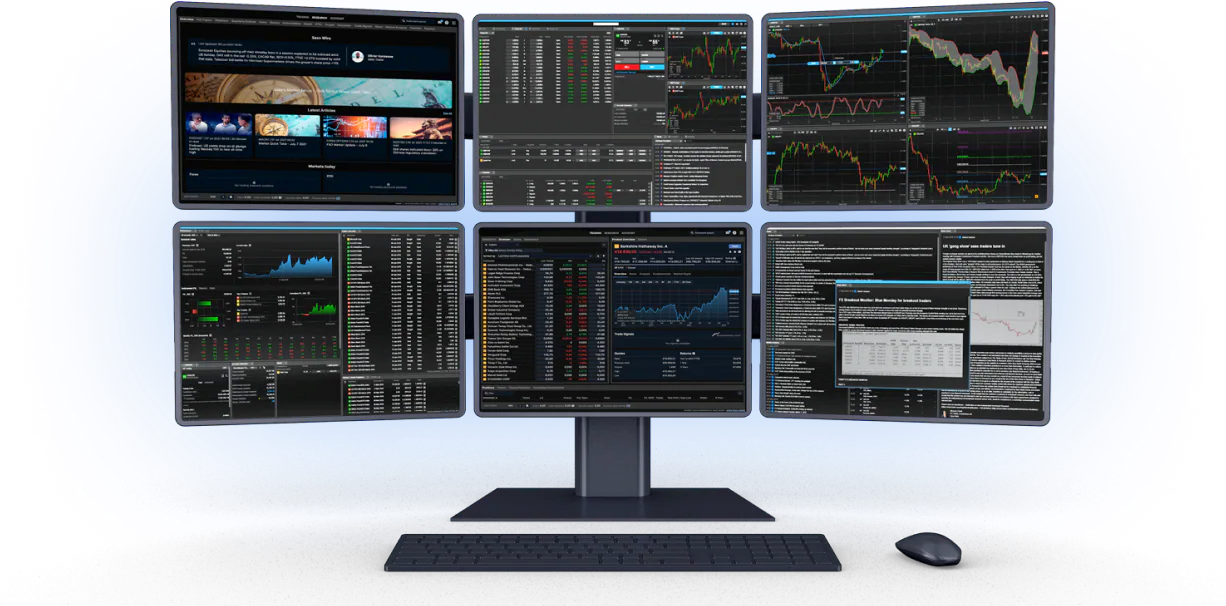
SaxoTrader is available both as a web-based platform in a browser and as a mobile app. A desktop version is also available for download, which supports a multi-screen setup and offers additional risk management and trading tools.
Our Impressions When Buying ETFs
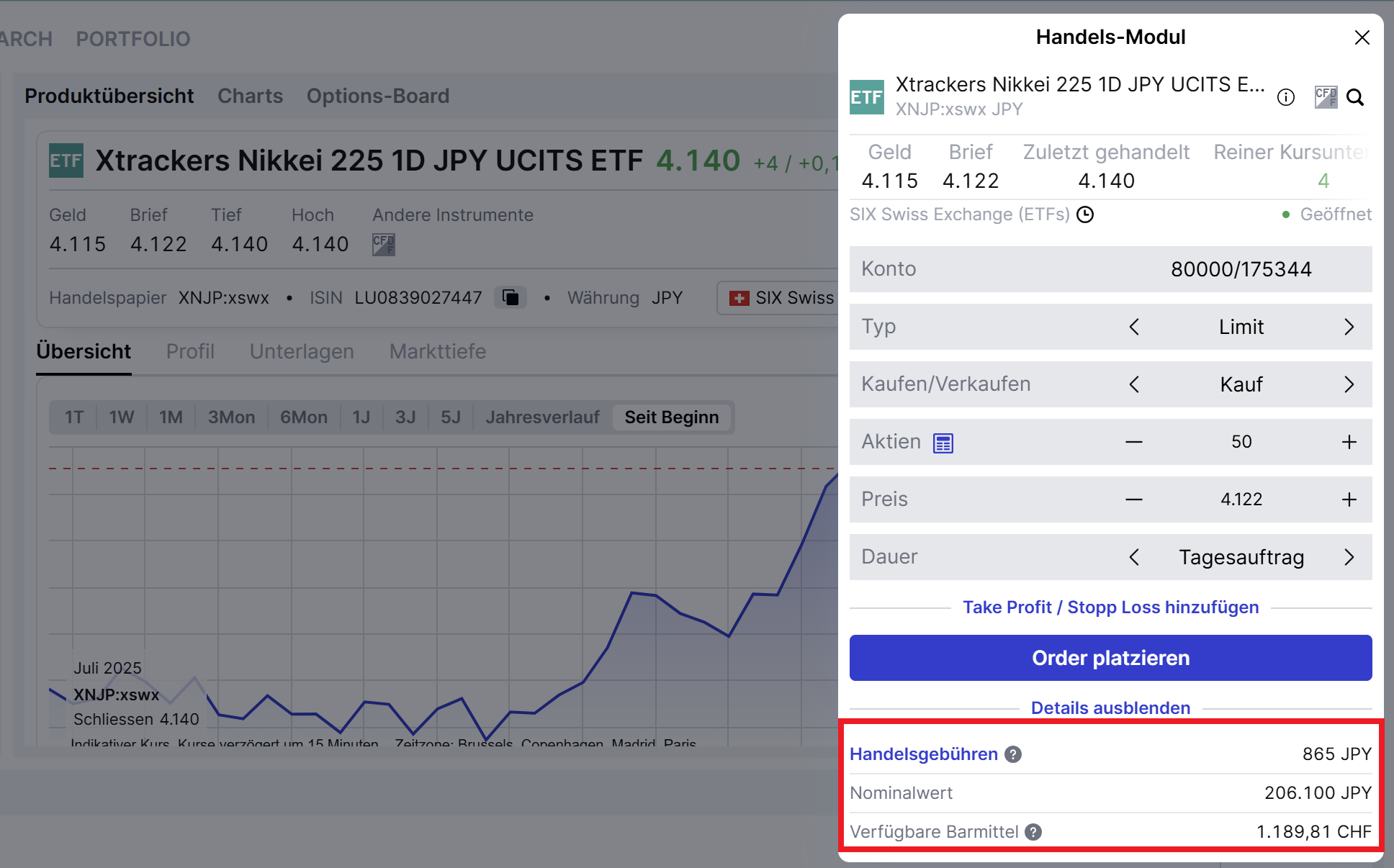
Purchases can be completed seamlessly on all three platforms and are displayed consistently. Our first test purchase: 25 shares of the iShares Core MSCI EM IMI UCITS ETF (Acc)—directly from our watchlist, where we’ve compiled all the top-performing products from our 2025 ETF comparison. We made the purchase via the SaxoInvestor app (see screenshots above in the fees section); the position is, of course, also displayed in SaxoTrader:

Note on Displaying Foreign Currency Transactions
A minor but practical criticism: When purchasing securities in foreign currencies, Saxo does not display an approximate equivalent value in Swiss francs. This makes it difficult—especially with less common currencies like the Japanese yen—to estimate whether the available balance is sufficient for the purchase. Automatically displaying the CHF amount would provide greater transparency and significantly simplify the decision to buy.
Conclusion on Trading Platforms
With its two platforms, Saxo offers tailored solutions—from the savvy, rule-based investor to the active high-volume trader (or vice versa).
From our perspective as “buy-and-hold” investors, SaxoInvestor is the most compelling choice, as this platform offers a successful combination of useful features (including ETF savings plans) and user-friendly functionality.
On the other hand, anyone who wants to trade complex products or simply wants even more features and analytics—for example, to engage in stock picking and market timing —will definitely be better served by SaxoTrader.
Investment Products & Services
Saxo Bank’s Investment Universe
Saxo Bank offers access to a broad investment universe: Over 7,400 ETFs and approximately 23,000 individual stocks are tradable on more than 50 global stock exchanges—including the Swiss stock exchange SIX.
Not surprisingly, all of the winning ETFs we selected in our ” Best ETFs in Switzerland and Globally ” review are also available, based on our experience with Saxo Bank.
The core offering is supplemented by bonds, mutual funds, and crypto ETPs.
Those who also wish to invest in margin products will find a wide selection at Saxo, including exchange-traded options and futures, foreign exchange, foreign exchange options, cryptocurrencies, CFDs, and commodities.
However, these more complex products are only made available after an additional suitability assessment.
Foreign Currency Accounts at Saxo
If you regularly trade in foreign currencies, it’s worth opening a foreign currency account—because this way you can avoid repeated currency conversions and save on fees. At Saxo, in addition to the reference currency (CHF), you can set up additional currency accounts (so-called sub-accounts with their own IBAN). However, these must be activated individually for each desired currency.
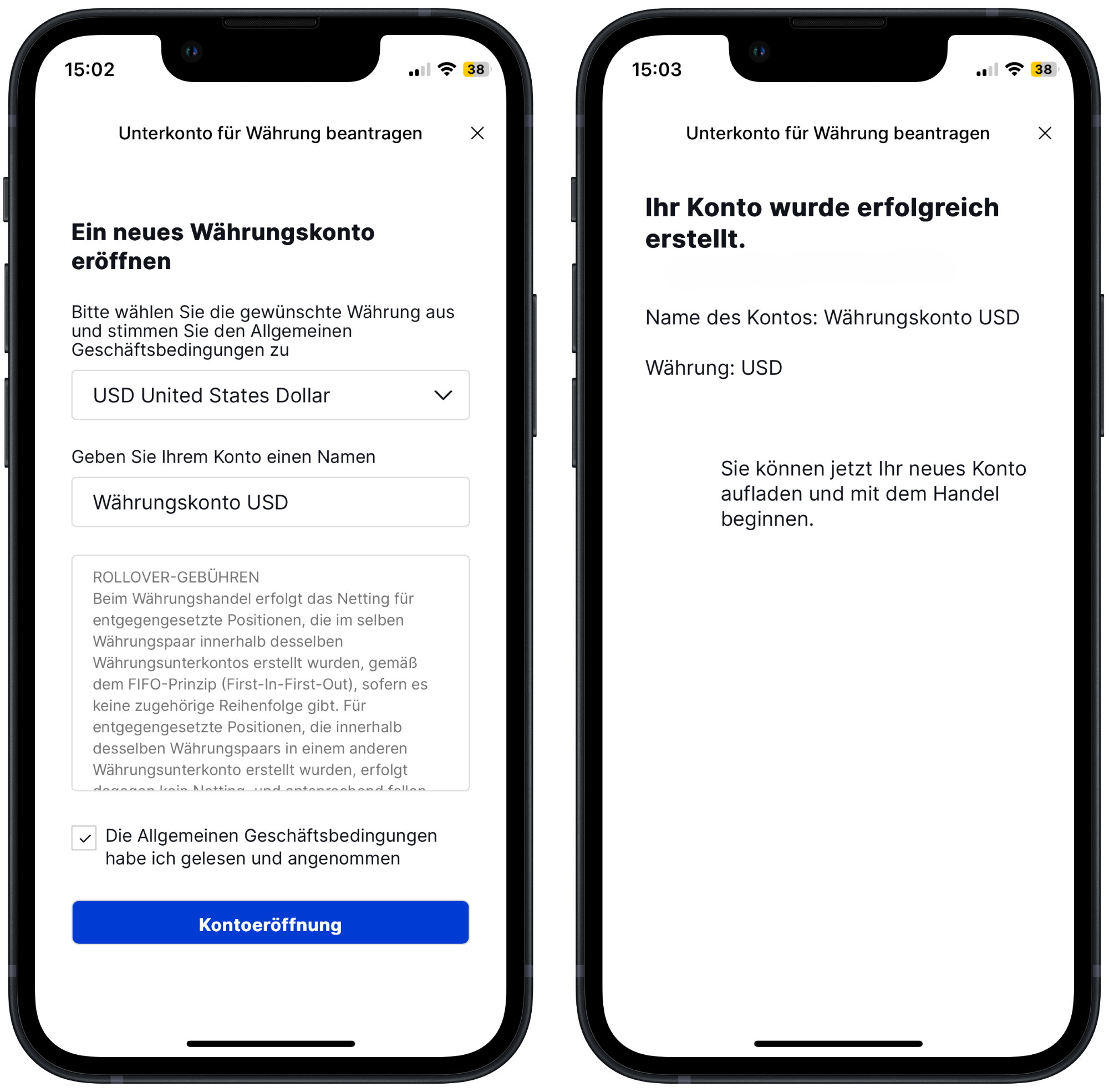
The key point: As the phone support team confirmed in response to our inquiry, currency conversion fees can be avoided if purchases in foreign currencies are made specifically through the appropriate subaccount. Not only must this subaccount be set up manually in advance, but it must also have sufficient cash on hand—since there is no automatic transfer from the main CHF account.
AutoInvest: Saxo’s ETF Savings Plan
With AutoInvest, Saxo offers a simple and commission-free way to invest regularly in ETFs. We were particularly impressed by the fact that you can invest in multiple ETFs at the same time, which allows for broad diversification—all without any purchase fees.
Execution takes place on the 5th of each month, which makes planning easier but limits flexibility. Only whole ETF shares are invested; that is, there is no fractional trading. As a result, a relatively large remaining amount may remain uninvested in cases of small savings amounts or ETFs with a high value per share. However, this amount is automatically reserved for the following month.
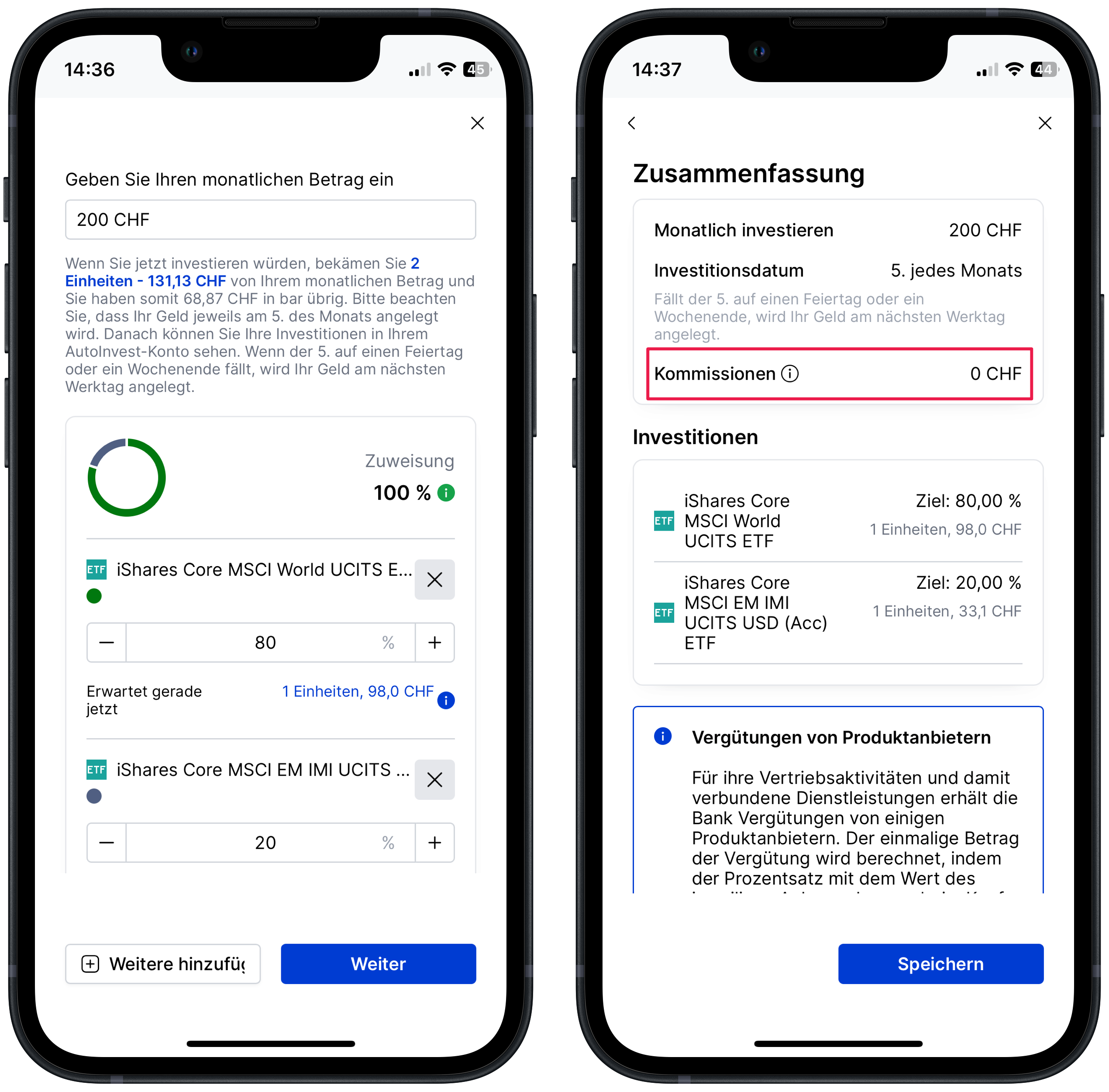
Important: Each savings plan is managed through a separate subaccount with its own IBAN. Deposits should ideally be made via standing order from an external account (e.g., your primary bank), as automatic debits from your main Saxo account are not possible. This specific detail was confirmed to us upon request by Saxo Bank’s telephone support. However, according to the Saxo FAQ, individual transfers from the CHF main account to the AutoInvest subaccount can be made manually at any time.
Saxo’s savings plans currently offer a selection of ETFs from iShares and Amundi —two well-known providers, even though the product lineup could still be expanded. You can find the ETFs currently available for savings plans at Saxo Bank here.
Despite the weaknesses mentioned, we consider AutoInvest to be, on the whole, a successful way to get started with regular investing—especially since Saxo waives the usual trading commissions.
Passive Income Through Securities Lending
With Saxo, you have the option to enable securities lending directly through the platform, allowing you to generate passive income.
The deal: You receive 50% of the proceeds; the bank keeps the other half. This ensures that high-quality collateral worth at least 102% of the proceeds is held in a separate Swiss securities account.
Important: Your freedom to trade remains unrestricted—you can buy or sell your securities at any time as usual.
Our Experience with Saxo Bank’s Customer Support
Saxo Bank offers five support channels:
- FAQs with Video Tutorials
The ” Quick Start” FAQs, which explain basic features via video, are especially helpful for new users. - Email
If you prefer traditional email, you can send your inquiry to sales.ch@saxobank.com. This channel is intended specifically for potential new customers who, for example, still have questions about opening an account. - Chatbot
This channel is naturally the most efficient – and is therefore heavily promoted. The chatbot answers standard questions quickly and satisfactorily. However, for more specific inquiries – such as whether deposits to a savings plan must necessarily be made from an external account – the answers often remain imprecise or incomplete. - Phone Support
Saxo customer service is available in German and French during business hours, and 24/7 in English: +41 58 317 95 00.
We contacted Saxo’s German-speaking support team with a few tricky questions about platforms, AutoInvest, and foreign currency accounts—and received expert answers in each case after a short wait in the queue.
While waiting, a recorded message informs you of your current position in the queue and mentions the option to switch directly to the (even more efficient) English-language support. - Ticketing system
For non-urgent but more complex requests, the ticketing system directly on the platform is suitable. Users are guided through thematic categories to ensure their request reaches the appropriate specialist team.
Conclusion
Based on our experience with Saxo Bank, the support system is very solid overall and offers appropriate channels for a variety of needs—from quick responses via chatbot to personalized advice over the phone. We were particularly impressed by the knowledgeable German-speaking phone support. Even though the chatbot still has room for improvement when it comes to more complex questions, the combination of help documentation, videos, personal support, and a structured ticket system impresses with its good responsiveness and clear focus on customer satisfaction.
What is the process for opening a brokerage account?
Opening an account with Saxo is a completely digital process—and comes with a bonus to boot.
Important: Open your account using our affiliate link to save up to 200 CHF in trading fees .
For this process, have your smartphone, a valid passport or ID, and a few minutes to spare. Then follow these step-by-step instructions:
- Get Started via Partner Link
You’ll be taken directly to Saxo’s registration page, where you’ll enter your email address and name. - Beneficial Owner
You confirm that you yourself are the beneficial owner of the account. - Personal Information
Next, enter your gender, date of birth, and country of birth. - Proof of Identity
Upload a scan of your passport or ID card. - Employment & Income
You must provide information about your employment status, employer, job title, income, assets, and the source of your funds. - Investment Experience & Use
Saxo asks you about your experience with financial instruments and how you plan to use the account. - Tax Information
You must indicate your tax residence and confirm that you are not a politically exposed person and are not a U.S. person. - Contact Information
Next, provide your home address and phone number. - Legal Information & Login Credentials
You accept the Terms and Conditions, set your password —and confirm everything with an electronic signature. - Selfie & Completion
Finally, take a quick selfie with your smartphone or webcam—for identity verification. - Verification by Saxo
Based on our experience with Saxo Bank, the verification process was quick: Just five minutes after submitting the application, we received an email confirming that the account had been approved —including the new account details and the Saxo user ID.
Saxo vs. Swissquote: A Head-to-Head Comparison
In this overview, we compare the up-and-comer Saxo with the established market leader Swissquote—two Swiss providers with different focuses: Saxo focuses on investing and trading, while Swissquote is a comprehensive full-service provider offering additional banking services such as cards and payment processing.
| Saxo | Swissquote | |
| Swiss banking license | Yes | Yes |
| Deposit Insurance | Up to 100,000 CHF | Up to 100,000 CHF |
| Product Lineup | Focus on Investing and Trading | Very broad (everything under one roof: trading, cards, payments, etc.) |
| Custody Fees | None | CHF 60–200 per year (based on portfolio value) |
| Trading Fees Price Examples for ETF Trades: 10,000 CHF on the Swiss Stock Exchange 10,000 USD on the U.S. Stock Exchange | 3–8 CHF* 3–8 USD* | 9 CHF** 30 USD |
| Currency Conversion | 0,25% | 0,95% |
| Savings Plans | No purchase fees | With purchase fees starting at 3 CHF |
| Fragment trading (Fractional Trading) | No | Yes |
Conclusion
Saxo offers significantly lower fees overall and is geared toward investors who focus on investing and active trading.
Swissquote stands out as an established full-service provider with innovative features such as fractional trading and an exceptionally broad range of offerings—from investments and credit cards to comprehensive banking services.
Both platforms guarantee a high level of security, reliable regulation, and expert support. Which one is a better fit depends on your individual needs and goals.
Interview with Oliver Buomberger, COO & Deputy CEO of Saxo Bank Switzerland
Since 2021, Oliver Buomberger has been responsible for the operational development of Saxo Bank Switzerland. In this interview, he reveals how the latest pricing initiative has been received by Swiss investors, what sets it apart—and what innovations Saxo has in store for 2026.
Saxo has really pulled off a masterful move in Switzerland: Custody fees are gone, and ETF savings plans can now be set up without purchase fees. How have Swiss investors—who are traditionally rather reluctant to switch—reacted to your price offensive?
Oliver Buomberger: Our latest pricing initiative has been very well received by Swiss investors. The elimination of custody fees and the new ETF savings plans with no purchase fees have been enthusiastically received. These measures have not only attracted many new investors but have also strengthened the trust and satisfaction of our existing customers. In fact, we’ve doubled the number of users on our platforms for two consecutive years. Thanks to substantial progress in customer satisfaction, as measured by our NPS, we’re certainly among the best in this regard—a clear indication of how much our Swiss customers value what we offer.
We are proud of this unique offering, which makes it easier to get started in investing at minimal cost. This successful strategy underscores our commitment to providing innovative and customer-friendly solutions that have a lasting impact on the Swiss market.
You operate globally. How do the investment habits of your Swiss clients differ from those in other markets?
The investment behavior of our Swiss clients is characterized by several interesting differences compared to other markets. One of the most striking aspects is the high level of financial literacy that many Swiss investors possess. They are often better informed and have a strong grasp of financial matters, which is reflected in their well-informed investment decisions.
In addition, Swiss clients have proven to be particularly tech-savvy. They navigate our platform with ease and make effective use of its features, which makes it easier for them to access more complex financial products and build more diversified portfolios. Another difference is the focus on stability and security, which often leads to more conservative or lower-risk investment decisions.
Looking Ahead to 2026: What Can We Look Forward To—New Features, Further Fee Reductions, or Surprises of a Completely Different Kind?
We will present additional innovative solutions that make investing easier and more rewarding. These include theme-based ETPs that allow our clients to invest in sectors such as artificial intelligence, healthcare, defense, crypto & blockchain, or cybersecurity with just one click—and at very competitive prices.
In addition, we plan to expand our successful AutoInvest product and are working on a solution for Pillar 3a. We will also continue to improve the Saxo Investor Platform to meet our clients’ evolving needs and provide an even more intuitive user experience.
Thank you very much, Oliver, for the fascinating insights.
(The interview with Oliver Buomberger was conducted in writing on December 1, 2025, and is reproduced here in a slightly abridged form.)
Final Conclusions and Recommendations Based on Our Experience with Saxo Bank
With its revamped fee structure—which eliminates recurring costs and places a clear focus on digital, self-directed investing—Saxo has established itself as a major player among Swiss online brokers.
Based on our experience with Saxo Bank and as passive ETF investors, the following points stand out as particularly positive to us:
- No custody fees —a major advantage for long-term investors
- Transparent and fair brokerage fees starting at 1 USD / 3 CHF —especially when compared to other Swiss providers
- Reasonable currency conversion fees of 0.25%— with no minimum fee
- ETF savings plans with no purchase fees —ideal for regular investing without additional costs
- Modern trading platforms —intuitive and tailored to a variety of needs
- High level of regulatory certainty – FINMA license and deposit insurance up to 100,000 CHF
- Broad investment universe —including over 7,400 ETFs and more than 23,000 stocks worldwide
- Efficient Support – Multilingual support via phone, email, chatbot, or ticket system
Of course, there is also room for improvement —we’ve noticed this particularly in connection with the savings plan (AutoInvest): As commendable as the elimination of purchase commissions may be, the technical implementation still has room for improvement in the details: no automatic debits from the main account, no fractional trading, and no flexible execution intervals.
Our Recommendation
Our experience with Saxo Bank shows that the platform is ideal for investors who want to invest in ETFs regularly, for the long term, and cost-effectively—while relying on a provider regulated in Switzerland.
The overall package is particularly compelling for passive investors with a buy-and-hold strategy: The combination of regulatory certainty, commission-free ETF savings plans, and modern platforms makes for a strong offering.
Active traders are also likely to find Saxo appealing given its broad range of products and professional tools—though this area was not included in our test.
To return to the question posed in the title: Does Saxo deserve the title of “Best Swiss Broker” following its series of fee cuts? For many long-term ETF investors, the answer is likely a resounding yes. The new fee model, combined with a broad product offering, modern technology, and Swiss regulation, currently makes Saxo one of the most attractive brokers on the market.
And the best for last: If you open a free investment account now using our partner link in the ad below, you’ll receive 200 CHF in trading credits—an attractive bonus to get you started.
You might also be interested in this



Update
September 20, 2026: Added a note regarding manual deposits to the AutoInvest subaccount.
March 20, 2026: Various minor updates were made.
December 3, 2025: Interview with Oliver Buomberger, COO of Saxo Switzerland, added.
November 20, 2025: The new SaxoTrader platform, a merger of SaxoTraderGO and SaxoTraderPro, is explained.
July 24, 2025: Clarified that an upgrade to the “Platinum” and “VIP” account models is limited to one year and depends not only on the deposit amount but also on other factors such as trading frequency and trading volume.
Disclaimer
Disclaimer: Investing involves the risk of loss. You must decide for yourself whether or not you are willing to accept these risks.
Subject to error: We have written this article about our experiences with Saxo Bank to the best of our knowledge and belief. Our goal is to provide you, as a retail investor, with information on financial topics that is as objective and informative as possible. However, if we have made any errors, omitted important details, and/or if the information is no longer up to date, we would appreciate it if you could bring these issues to our attention.
Disclosure: We are impressed by the offerings of this up-and-coming Swiss online bank and have therefore entered into a commission-based partnership with Saxo Bank. Nevertheless, our assessments remain independent and are based on our own experiences as well as objective criteria.





20 Kommentare
Hallo Stefan & Toni, danke für das ausführliche Review. Eine Frage zum AutoInvest-Sparplan: Ist die Ausführung immer noch fix am 5. des Monats oder hat Saxo hier inzwischen flexiblere Intervalle eingeführt? Und gibt es mittlerweile eine Möglichkeit, das Sparplan-Unterkonto direkt vom CHF-Hauptkonto zu speisen, statt per Dauerauftrag von der Hausbank?
Hoi Annabelle
Der Ausführungstag ist weiterhin fix der 5. (bzw. der nächste Bankarbeitstag) – ein frei wählbarer Tag oder andere Intervalle sind nach wie vor nicht möglich. Vom CHF-Hauptkonto aufs AutoInvest-Unterkonto kannst du manuell überweisen, einen Dauerauftrag ist jedoch nur über die Hausbank möglich. Quelle: https://www.home.saxo/de-ch/products/autoinvest
In Bezug auf die Kontenmodelle (Classic, Platinum und VIP und der damit einhergehenden Vergünstigungen): ich habe da auch ein bisschen suchen müssen aber es scheint so zu sein:
1. für die Konten Platinum und VIP gelten Mindesteinlagen (Platinum 250´000; VIP 1´000´000) – ab der Einlage bekommst du aber nicht automatisch das Kontomodell denn
2. musst du binnen 12 Monaten 120´000 Punkte (Platinum) bzw. 1´000´000 Punkte (VIP) gesammelt hast – dann wirst du für mindestens 12 Monate auf die entsprechende Kontostufe gehoben. Punkte gibt es einmal für ausgeführte Trades und zum anderen für Einlagen (0,025 Punkte pro Monat für 1 CHF). Wenn du durch ausgeführte Trades oder die Einlagen und die damit gesammelten Punkte über 120´000 Punkte in Jahr bleibst, bleibst du in der Kontostufe, fällst du unter 120´000 Punkte bleibst du noch für 12 weitere Monate auf der Kontostufe und fällst dann auf Classic zurück. In einer Tabelle auf der Saxo-Website ist gelistet wie viele Punkte welcher Trade bringt. Für deine Einlagen bekommst du wie gesagt monatlich Punkte: 0,025 Punkte pro 1 CHF. Also brauchst du scheinbar 400´000 CHF Einlagen (10´000 : 0,025 = 400´000 — 10´000 weil 12×10´000 = die angepeilten 120´000 pro Jahr sind) um allein über die Einlagen, ohne Trades in 12 Monaten auf die 120´000 Punkte für das Konto Platinum zu kommen.
Das ganze findet ihr auf der Saxo-Seite unter Konten – Saxo-Rewards (so nennen sie das Punktesystem)
Das Detail mit den 0,025 Punkten pro Monat für 1 CHF / EUR Einlagen findet ihr bei den Fragen ganz unten unter “Wie verdiene ich Punkte für Kontoeinzahlungen?”
Also scheint es so als ob man ganz ohne Trades ab 400´000 CHF ein Platinum Konto halten könnte … keine niedrige Schwelle
(sorry für den langen Text)
No Trust in Sax
Abot my experience with Saxo.
They required actually all of my financial data about income and assets. Including tax declaration. They threaten to close my account if I don’t comply. I tried to figure out, what could be done about it by opening a chat, but the lady just told me, that I cannot get in touch with an analyst, who sets the requirements. They sent me all the time emails with the count-down of days left to comply like ’15 days left’, ’10 days left’, …. After reading reviews about blocked accounts, I was definitely alarmed. I transferred all stock title and closed the account. After all, I had much money there. It was a real bad and stressful experience.
Vielen Dank für den Beitrag.
Nach dem Lesen Eurer tollen Beiträge würde ich gerne Euren ETF Gewinner
„ SPDR MSCI ACWI UCITS ETF“ monatlich mit 250 CHF besparen (buy and hold) – dies über die nächsten 20-30 Jahre (möglicherweise mit steigenden Beträgen, z.B. 500 statt 250 in kommenden Jahren).
Was mir aber nicht ganz klar wurde:
1. Wo sind die totalen Kosten geringer: Saxo oder Interactive Brokers?
2. Kann man diesen ETF bei Saxo auch mit Auto Invest besparen?
3. Was heisst bei Saxo AutoInvest ohne Kaufprovision? Heisst das die 3 CHF fallen nicht an?
4. Bei Saxo bekommt man anscheinend eine Steuerbescheinigung. Ist dies auch bei Interactive Brokers der Fall oder wie wird dies dort gehandhabt?
5. Welchen Anbieter (Saxo oder Interactive Brokers) erachtet Ihr für mein Vorhaben basierend auf Eurer Erfahrung als vorteilhafter (alles miteingenommen, nicht nur die Kosten)?
PS: Degiro habe ich bereits darum lote ich nun Saxo und InteractiveBrokers aus.
Bitte gehe unsere Reviews nochmals durch. Dort findest du die (meisten) Antworten.
Hallo David
Der „SPDR MSCI ACWI UCITS ETF“ ist nicht in Autoinvest verfügbar.
Ich empfehle dir stattdessen den „iShares MSCI ACWI UCITS ETF | SSACCHF“ mit Sparplan über die Saxo Bank. Leider beträgt der TER 0,20 %, was nicht so gut ist wie beim SPDR.
Interactive Brokers ist kostengünstiger: Du zahlst keine Stempelsteuer, die Kaufgebühr ist mit ca. 35–50 Rappen über ein gestaffeltes Modell praktisch gratis und es gibt hohe Volumen und hohe Dividendenausschüttungen (ca. 0,30 % mehr netto). Die Währungswechselgebühr ist ebenfalls sehr gering. Der einzige Nachteil ist die Komplexität der US-Erbschaftsteuer.
„AutoInvest“ ohne Kaufprovision bedeutet, dass du beim Kauf nur die Stempelsteuer zahlst und beim Verkauf beide Gebühren (Stempelsteuer @ 0,15 % + Verkaufsgebühr @ 0,08 %, mindestens 1 CHF).
Ich habe bei IBKR ein Depot mit über 150.000 CHF, das ohne Probleme versteuert wird. Du musst lediglich den Jahreskontoauszug herunterladen und die entsprechenden Seiten der Steuererklärung beilegen.
Für Kleinbeträge würde ich dir sowohl Neon als auch die Saxobank empfehlen. IBKR eher nicht, wegen der Komplexität.
Ihr nennt die Kosten eines Währungsumtauschs bei SAXO von 0.25%.
Für grössere Beträge ist das nicht gerade günstig. Aber mit entsprechenden Fremdwährungskonten kann ich doch bei SAXO auch direkt auf der FOREX zu viel günstigeren Konditionen Devisen tauschen. Oder sehe ich das falsch?
Konkret interessiere ich mich für eine Kontoeröffnung bei SAXO oder DEGIRO. Ich verfüge über einen grösseren Cash-Bestand in USD bei der POSTFINANCE (aus Tesla-Verkäufen). Was kostet mich ein Übertrag von USD 500‘000 auf SAXO oder DEGIRO und wieviel zahle ich dort je für den Umtausch des ganzen Betrages in CHF?
DEGIRO fällt weg, da Ein- und Auszahlungen für Schweizer Kunden nur in CHF möglich sind.
Bei Saxo ist ein USD-Transfer möglich (separates USD-Konto nötig). Der automatische Währungsumtausch kostet 0,25 %. Günstiger geht es theoretisch über einen FX-Spot-Trade, dazu haben wir selbst jedoch keine praktische Erfahrung.
Der USD-Transfer von PostFinance erfolgt via SWIFT und ist nicht kostenlos – diese Kosten fallen unabhängig vom Zielbroker an.
Rein für den Währungswechsel ist Interactive Brokers (Review) gemäss unseren Erfahrungen am günstigsten.
ich suche einen broker wo ich mein eur guthaben, ohne es in chf zu wechseln zu müssen, in eur basierte etfs investieren kann. ist dies hier der fall?
Ja, das ist möglich, indem du ein separates EUR-Konto bei Saxo eröffnest: https://schweizerfinanzblog.ch/saxo-bank-erfahrungen-fundiert-und-kritisch/#Fremdwaehrungskonten_bei_Saxo
Bonjour,
J’ai ouvert un compte chez Saxo Bank et je souhaitais notamment investir dans l’ETF Vanguard FTSE All-World UCITS ETF Distribution. J’ai vu qu’il était malheureusement pas disponible. Quel ETF proposeriez-vous comme alternative ?
Salut Marco,
L’ETF que tu recherches est disponible chez Saxo sur quatre places boursières différentes, notamment en CHF à la bourse suisse SIX. Tape le symbole VWRL dans la barre de recherche, tu devrais le trouver.
Meilleures salutations,
SFB
Merci avec des mots clés il n’apparaissait pas
Seit bald zwei Jahren bin ich Kunde bei SAXO. Nun erhielt ich die Nachricht, dass SAXO meinem amtlichen CH-Ausweis (ID) nicht traut und mich dementsprechend blockiert. Antworten aus Dänemark sind leider nicht konkret, nur, dass Abklärungen pendent sind. Ich bin seit Wochen blockiert.
Ich nutze Saxo auch schön längere um bin eigentlich sehr zufrieden. Plattform ist gut und ich konnte auch ohne Probleme eine ETF Position übertragen.
Ich frage mich nur, wie Saxo genügend Geld macht mit diesen Preisen? Sie haben ja auch Infrastruktur und Mitarbeiter in der Schweiz die einiges kosten
Hallo
Danke für das Review. Ist es bei Saxobank möglich Namensaktien zu halten?
Gemäss Auskunft des Saxo Supports ist es zur Zeit nicht möglich, Schweizer Aktien auf den eigenen Namen im Aktienregister einzutragen. Kunden haben aber die Möglichkeit, an Aktionärsversammlungen teilzunehmen und/oder ihre Stimme digital abzugeben. Mehr dazu findest du hier: Stimmrechtsvertretung (Proxy Voting)
Ich nutze Saxo nun schon einige Zeit und die Zufriedenheit würde ich mit ok bewerten.
1. Die Kontomodelle basieren eben nicht auf dem investierten Vermögen, wie ich auch dachte, denn als ich gemäss Vermögen eine Stufe höher hätte kommen sollen und ich nachfragte, hiess es, dass ich zuwenig Umsätze, als zuwenig gehandelt hätte.
2. Der Support empfinde ich als eher schwach, Antworten sind oft nicht befriedigend und auch lange Wartezeiten.
Ansonsten aber ist Saxo sicher das günstigste in der CH und darum gehts mir.
Vielen Dank für deinen wertvollen Input, Phil. Bezüglich der Kontomodelle haben wir den Artikel dahingehend präzisiert, dass ein Upgrade auf die Kontomodelle «Platinum» und «VIP» jeweils auf ein Jahr befristet ist und nicht nur von der Höhe der Einlage abhängt, sondern auch von anderen Faktoren wie Handelshäufigkeit und Handelsvolumen basierend auf dem Reward-Programm von Saxo.